

When a surgical wound or injury isn’t healing as expected, it can be frustrating and even worrying. In these situations, your doctor may recommend negative pressure wound therapy (NPWT) to support healing and provide your body with the extra support it needs.
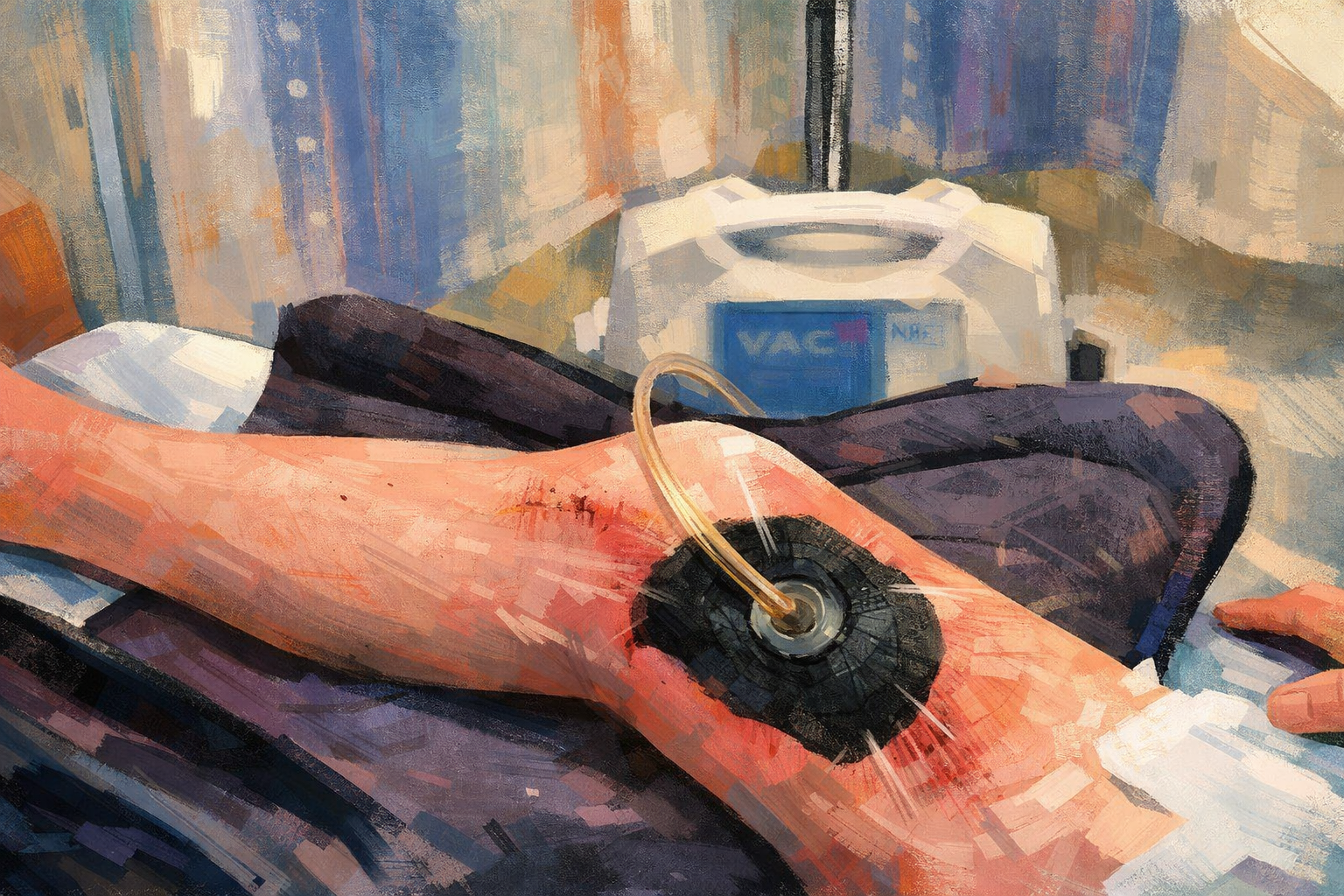
This therapy encourages recovery, but seeing the tubing and dressings for the first time can feel overwhelming. Often referred to as a wound vac, the setup may look unfamiliar or intimidating at first—and that reaction is completely normal.
It’s okay to have questions, concerns, or even anxiety when you learn that this treatment will be part of your care. Understanding what’s happening can make the process feel far more manageable.
Learn how wound vac therapy works, who it’s meant to help, what you can expect during treatment, and why wound care specialists often recommend it when standard care isn’t enough.
What Is Negative Pressure Wound Therapy?
Negative pressure wound therapy uses gentle suction to promote healing. A sealed dressing is placed over the area and connected to a small vacuum pump that removes excess fluid and bacteria while supporting healthy tissue growth.
Unlike traditional dressings that passively cover an injury, NPWT wound care actively supports the healing process by improving circulation, reducing swelling, and keeping the area clean and protected.
This therapy is used in advanced wound care therapy settings for injuries that are slow to heal or at high risk of infection.
How Does a Wound Vac Work?
Understanding how a wound vac works can make the treatment feel far less intimidating. When patients know what each part of the device does and why it’s being used, they’re more likely to feel informed, prepared, and confident throughout the healing process.
A typical wound vac system includes:
- A foam or gauze dressing is placed inside the wound
- A clear adhesive film that seals the area
- Tubing connected to a portable vacuum pump
- A collection canister for wound drainage
Once activated, the device applies gentle, continuous, or intermittent negative pressure. The suction created by the device:
- Removes excess fluid that can delay healing
- Reduces bacteria inside the wound
- Draws wound edges closer together
- Stimulates blood flow and new tissue growth
This controlled environment allows wounds to heal more efficiently than with standard dressings alone.
Who Benefits From Wound Vacuum Therapy?
Wound vac treatment is often used when a wound needs more support than basic dressings can provide. It’s recommended for wounds that are deep, slow to heal, or challenging to manage with standard care alone. In these situations, NPWT can help control drainage, reduce infection risk, and keep healing on track.
Common conditions treated with NPWT include:
| Wound Type / Situation | Why NPWT (Wound Vac) Is Used |
| Chronic, Non-Healing Wounds | Wound vac for chronic wounds helps restart healing by removing excess fluid and improving blood flow. |
| Diabetic Foot Ulcers | Wound vac for diabetic ulcers reduces infection risk, controls drainage, and supports slow-healing tissue. |
| Pressure Injuries (Bedsores) | NPWT removes trapped fluid and promotes the growth of new tissue. |
| Surgical Wounds That Reopen or Drain | Prevents fluid buildup and supports proper wound closure. |
| Post-Surgical Wounds (Preventive Use) | After surgery, a wound vac can lower the risk of infection and complications. |
| Traumatic Injuries | Treatment protects exposed tissue and accelerates healing. |
| Skin Grafts and Flaps | NPWT helps secure grafts, supports proper adherence, and limits fluid buildup. |
| Deep or Complex Wounds | A wound vac helps create the right healing conditions when basic wound care isn’t enough. |
Some studies have found that using a wound vac after surgery can reduce the odds of infection by 50% and help shorten hospital stays.
A wound care specialist evaluates your specific condition to determine whether negative pressure wound therapy is the appropriate treatment.
Is Wound Vac Therapy Painful
One of the most common questions patients have is whether NPWT therapy is painful. It’s understandable to worry about discomfort, especially when a new device is involved. While some patients notice mild discomfort at the beginning of treatment or during dressing changes, most find that this improves as the body adjusts.
In many cases:
- The suction is not painful
- Sensitivity often lessens within a few days
- Pain can often be managed with proper dressing techniques
Your wound care provider will monitor your comfort and adjust settings or materials as needed to help treatment remain manageable throughout the healing process.
Traditional Wound Care vs. Wound Vac Therapy
Many injuries heal well with basic bandages and routine care. Others, especially those with heavy drainage or slow healing, need more structured support to manage moisture, lower infection risk, and help healing progress consistently.
Here’s how NPWT compares to traditional wound care:
| Feature | Traditional Dressings | Wound Vac (NPWT) Therapy |
| Fluid Management | Absorbs drainage after it occurs. | Actively removes fluid as it forms. |
| Infection Risk Control | Relies on dressing changes and cleanliness. | Reduces bacterial load by limiting moisture buildup. |
| Healing Environment | Exposed to pressure changes and movement. | Maintains consistent, controlled pressure. |
| Dressing Changes | Frequent manual changes are required. | Fewer changes once the system is in place. |
| Monitoring | Visual checks during dressing changes. | Continuous therapy between visits. |
| Support for Deep or Draining Wounds | Often limited. | Designed for depth, tunneling, or heavy drainage. |
| Healing Progress | May be limited in deeper wounds. | Helps stimulate tissue growth and closure. |
In patients with delayed healing, wound vac benefits include improved fluid control, fewer infection-related complications, and more predictable healing.
What Is the Typical Wound Vac Healing Time?
Wound vac healing time isn’t the same for everyone. The condition of the wound, overall health, circulation, infection, and chronic health issues can all affect the rate of healing.
Even with these differences, many patients move through a similar healing timeline that includes:
- First 1–2 weeks. Reduced swelling and drainage.
- Weeks 2–4. Visible tissue growth and wound contraction.
- Weeks 4+. Gradual closure or readiness for the next treatment stage.
Some patients use NPWT for only a few weeks, while others may need treatment for a longer period. Throughout therapy, a wound care professional closely monitors healing and adjusts treatment as needed.
Can I Move Around With a Wound Vac?
Most patients can walk, sit, and continue everyday activities while using a portable wound vac device. These devices support mobility and independence, allowing healing to continue without confining patients or leaving them inactive.
Modern systems are designed to be:
- Lightweight and discreet
- Battery powered
- Easy to carry in a shoulder bag or belt pouch
Your provider will give clear instructions on bathing, sleeping, and activity limitations to keep the system working properly.
How Often Are Wound Vac Dressings Changed?
Wound vac dressings are changed on a regular schedule, with adjustments based on how the wound is responding and the amount of drainage.
Dressing replacement typically occurs:
- Every 24–72 hours for most stable wounds
- More often, if infection or heavy drainage is present
- Less frequently over time as drainage decreases and the wound stabilizes
This process is handled carefully by a trained wound care professional to maintain a sterile environment and ensure proper placement.
How Do You Know When To Discontinue Wound Vac Therapy?
NPWT is typically used for a limited period while a wound reaches a more stable stage of healing. The goal is to support the wound during its most vulnerable phase, then transition to standard care once healing is progressing well.
NPWT is usually discontinued once:
- Healthy tissue fills the wound bed
- Drainage decreases
- The wound can safely transition to standard care
Your wound care provider will determine the appropriate time to end therapy based on clinical progress and wound response.
Why Professional Wound Care Matters
Negative pressure wound therapy works best when managed by experienced medical professionals. Proper setup, regular monitoring, and timely adjustments are essential, since improper use can delay healing or lead to complications.
At Family & Wound Care Solutions, patients receive thorough evaluations, individualized treatment plans, and ongoing oversight to ensure wound vac therapy is both safe and effective.
Care is provided by licensed clinicians with advanced training in wound management. When additional therapies are needed, patients also benefit from coordinated care through the clinic’s full range of wound care services.
Take the Next Step Toward Better Wound Healing
Wound care can feel overwhelming, especially when healing takes longer than expected or the treatment process feels unfamiliar. Having a dedicated wound care team can make a difference by keeping healing on track and helping prevent complications.
If NPWT has been recommended for you or a loved one, Family & Wound Care Solutions offers individualized care plans, hands-on wound management, and ongoing monitoring to help you feel informed and supported throughout treatment.
Contact our team to schedule an evaluation. We can assess the wound, answer questions about treatment, and determine the next appropriate step in care.